config_file = 'RD_RPS'
figure_id = 'supp17'
config = ParticleGraphConfig.from_yaml(f'./config/{config_file}.yaml')
device = set_device("auto")Training GNN on reaction-diffusion (rock-paper-scissors)
Mesh
GNN Training
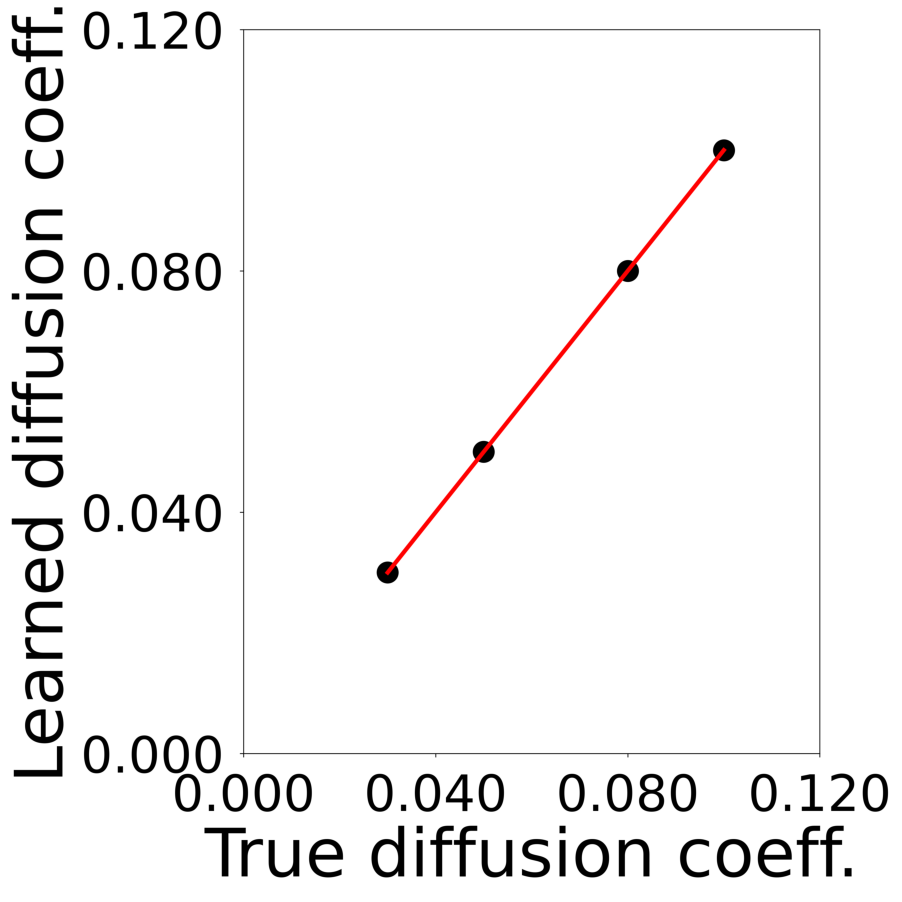
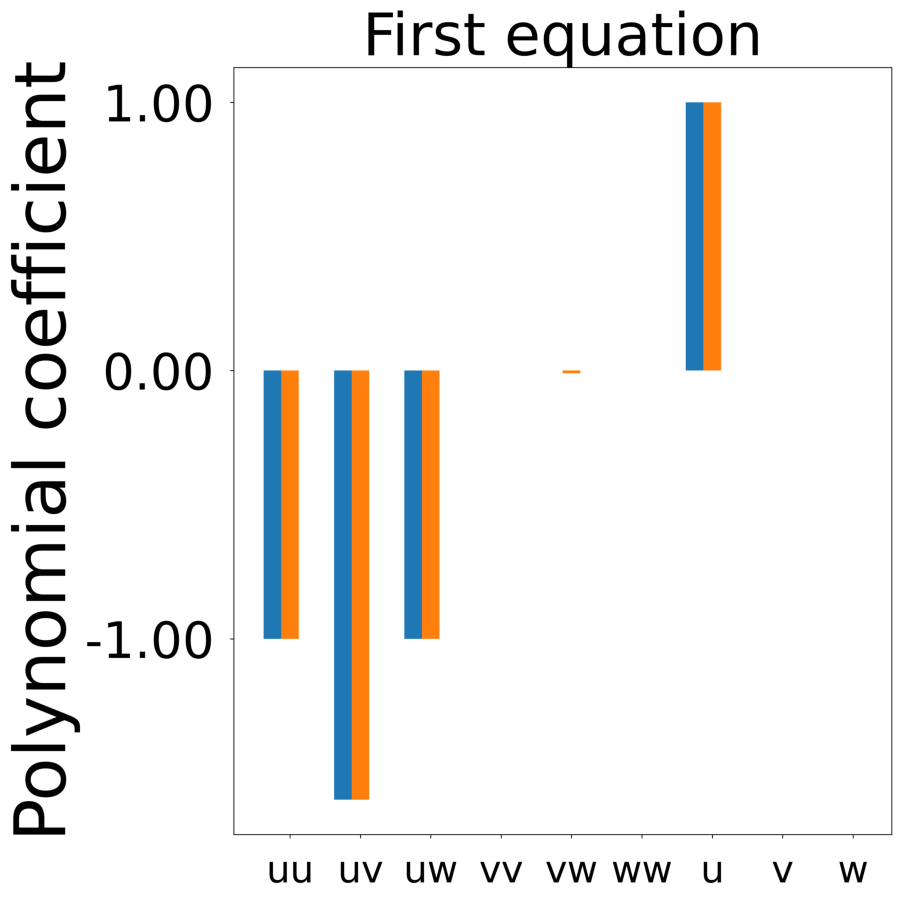
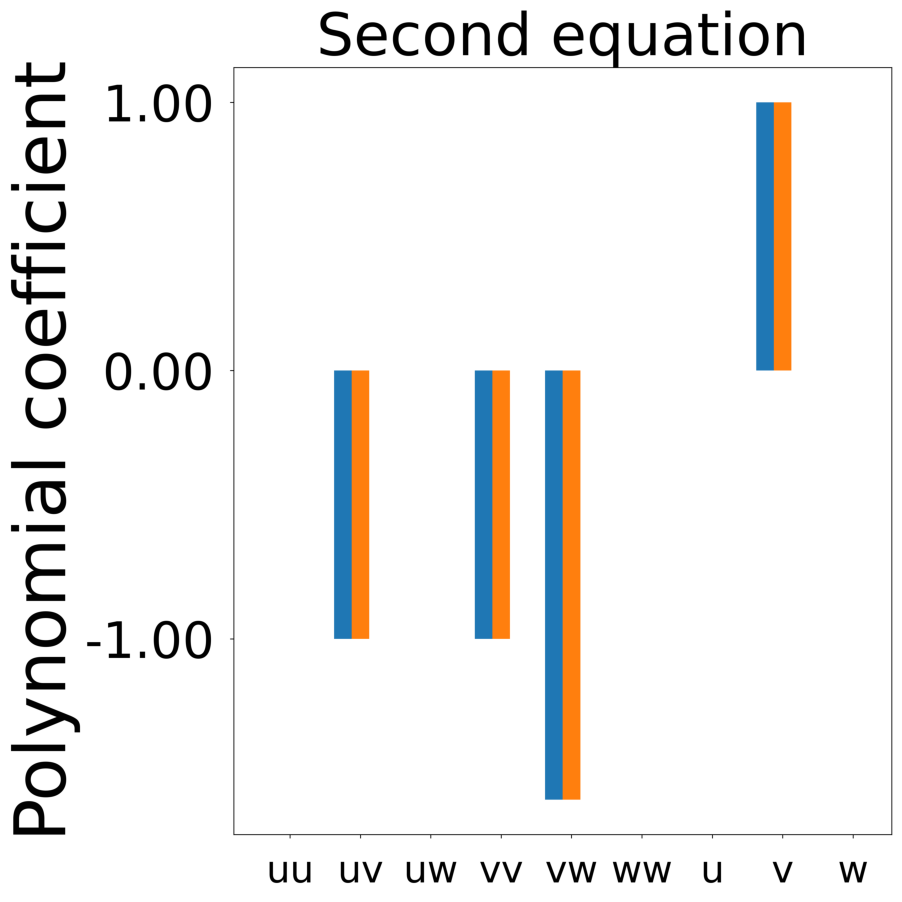
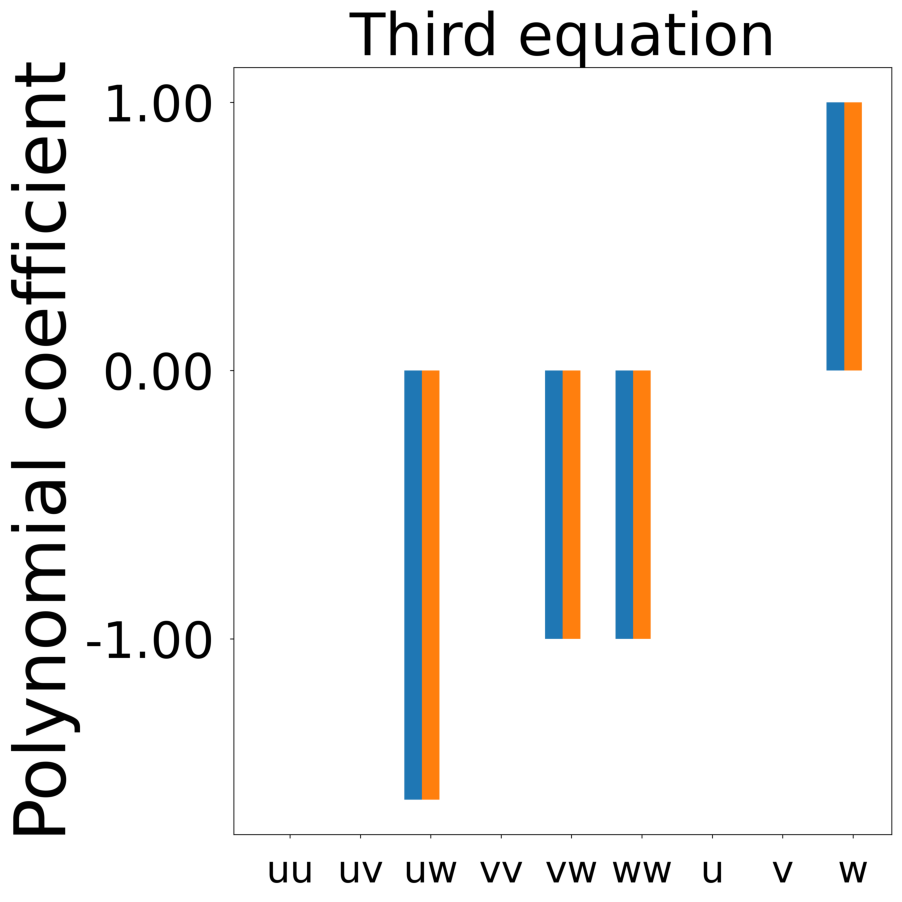
This script generates Supplementary Figure 17. It showcases a Graph Neural Network (GNN) learning the dynamics of a reaction-diffusion system. The training simulation involves 1E4 mesh nodes observed over 4E3 frames. Node interactions follow rock-paper-scissors rules with different diffusion coefficients.
First, we load the configuration file and set the device.
The following model is used to simulate the ‘rock-paper-scissor’ model with PyTorch Geometric.
class RDModel(pyg.nn.MessagePassing):
    """Interaction Network as proposed in this paper:
    https://proceedings.neurips.cc/paper/2016/hash/3147da8ab4a0437c15ef51a5cc7f2dc4-Abstract.html"""

    """
    Compute the reaction diffusion according to the rock paper scissor model.

    Inputs
    ----------
    data : a torch_geometric.data object
    Note the Laplacian coeeficients are in data.edge_attr

    Returns
    -------
    increment : float
        the first derivative of three scalar fields u, v and w

    """

    def __init__(self, aggr_type=[], bc_dpos=[], coeff = []):
        super(RDModel, self).__init__(aggr='add')  # "mean" aggregation.

        self.bc_dpos = bc_dpos
        self.coeff = coeff
        self.a = 0.6

    def forward(self, data):
        x, edge_index, edge_attr = data.x, data.edge_index, data.edge_attr

        c = self.coeff

        uvw = data.x[:, 6:9]
        laplace_uvw = c * self.propagate(data.edge_index, uvw=uvw, discrete_laplacian=data.edge_attr)
        p = torch.sum(uvw, axis=1)

        d_uvw = laplace_uvw + uvw * (1 - p[:, None] - self.a * uvw[:, [1, 2, 0]])
        # This is equivalent to the nonlinear reaction diffusion equation:
        #   du = D * laplace_u + u * (1 - p - a * v)
        #   dv = D * laplace_v + v * (1 - p - a * w)
        #   dw = D * laplace_w + w * (1 - p - a * u)

        return d_uvw

    def message(self, uvw_j, discrete_laplacian):
        return discrete_laplacian[:, None] * uvw_j


def bc_pos(x):
    return torch.remainder(x, 1.0)


def bc_dpos(x):
    return torch.remainder(x - 0.5, 1.0) - 0.5
The coefficients of diffusion are loaded from a tif file specified in the config yaml file and the data is generated.
Vizualizations of the reaction diffusion can be found in “decomp-gnn/paper_experiments/graphs_data/RD_RPS/”
If the simulation is too large, you can decrease n_particles and n_nodes in “RD_RPS.yaml”.
model = RDModel(
    aggr_type='add',
    bc_dpos=bc_dpos)

generate_kwargs = dict(device=device, visualize=True, run_vizualized=0, style='color', erase=False, save=True, step=50)
train_kwargs = dict(device=device, erase=True)
test_kwargs = dict(device=device, visualize=True, style='color', verbose=False, best_model='20', run=0, step=20)

data_generate_mesh(config, model , **generate_kwargs)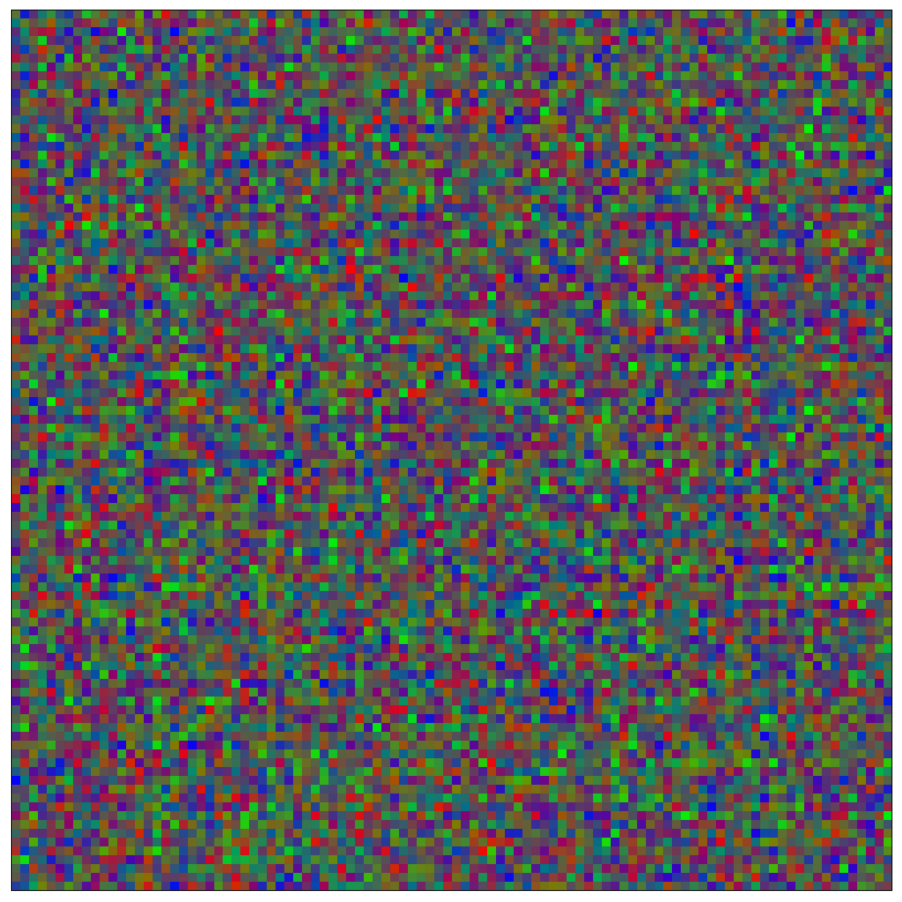
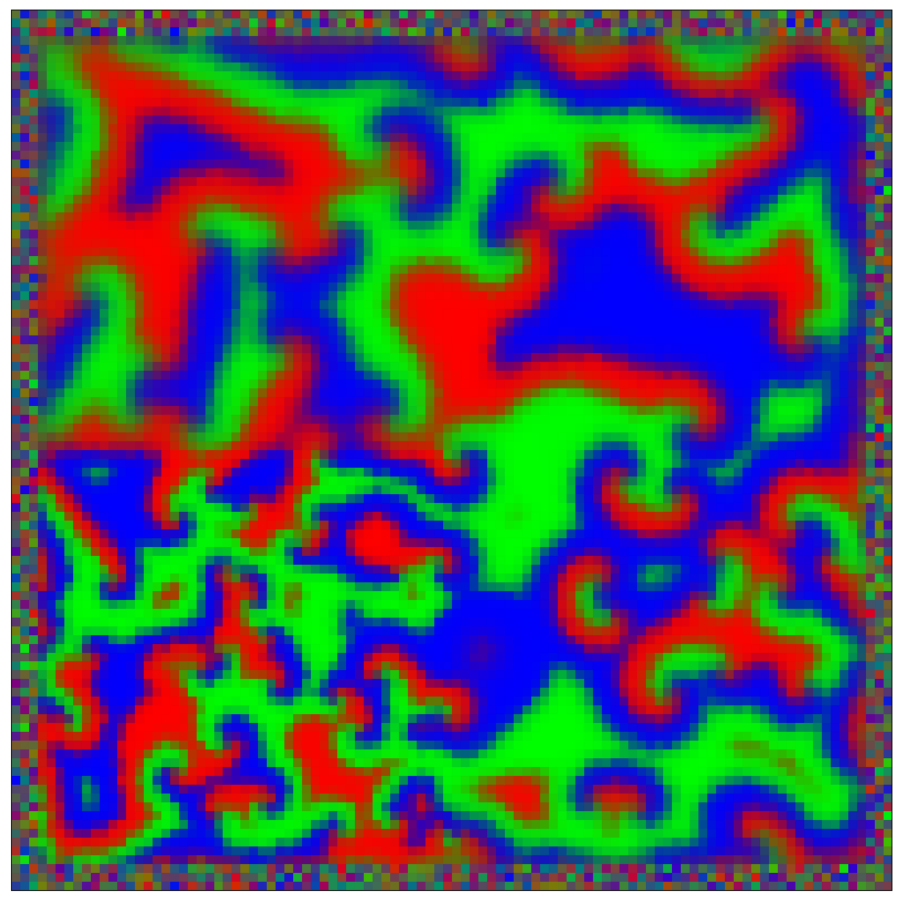
The GNN model (see src/ParticleGraph/models/Mesh_RPS.py) is optimized using the ‘rock-paper-scissor’ data.
Since we ship the trained model with the repository, this step can be skipped if desired.
if not os.path.exists(f'log/try_{config_file}'):
    data_train(config, config_file, **train_kwargs)
The model that has been trained in the previous step is used to generate the rollouts. The rollout visualization can be found in paper_experiments/log/try_RD_RPS/tmp_recons.
data_test(config, config_file, **test_kwargs)Finally, we generate the figures that are shown in Supplementary Figure 17. The results of the GNN post-analysis are saved into ‘decomp-gnn/paper_experiments/log/try_RD_RPS/results’.
config_list, epoch_list = get_figures(figure_id, device=device)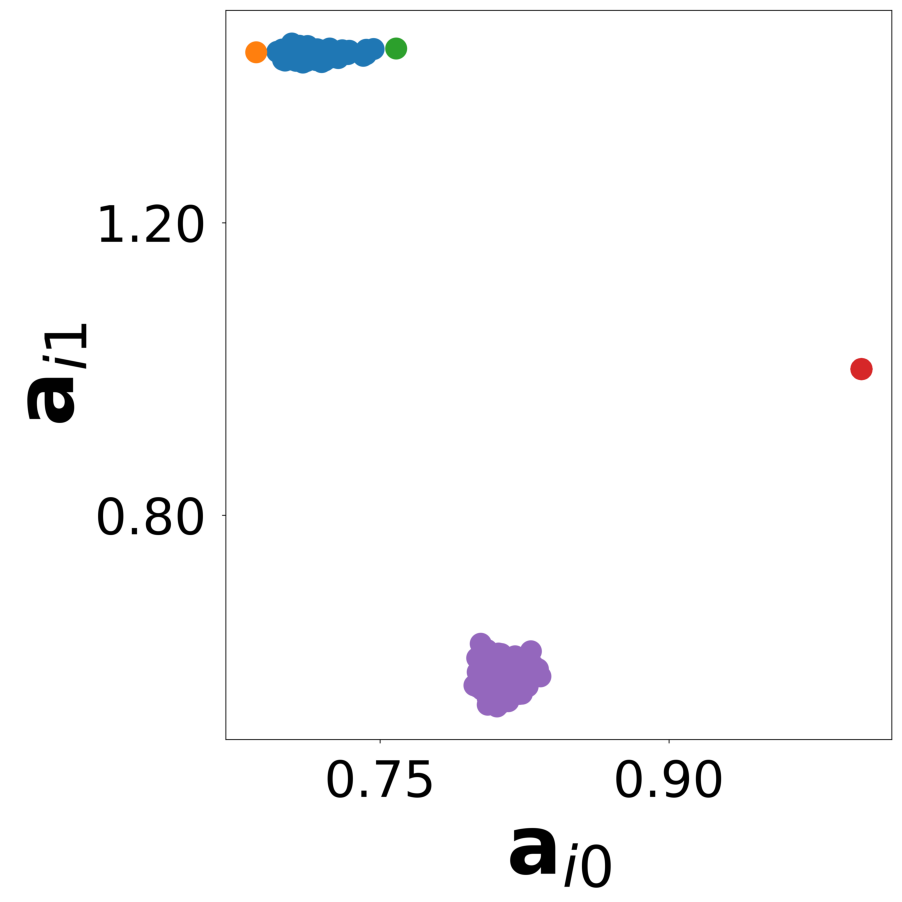
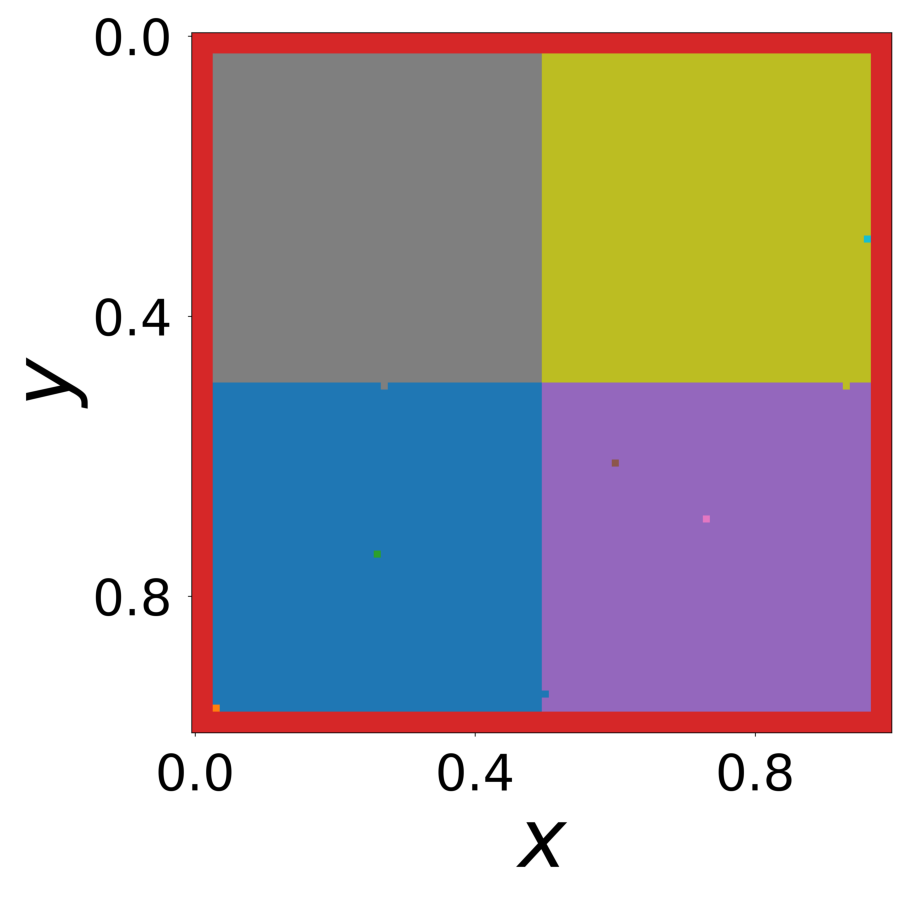
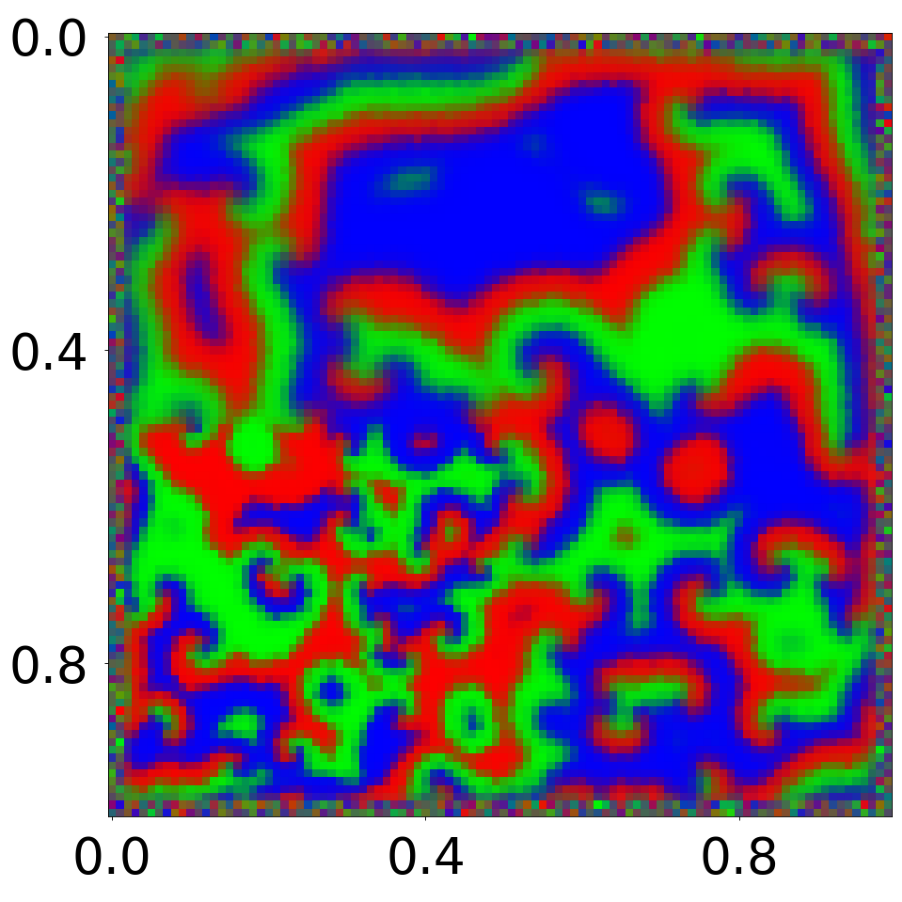
All frames can be found in “decomp-gnn/paper_experiments/log/try_RD_RPS/tmp_recons/”