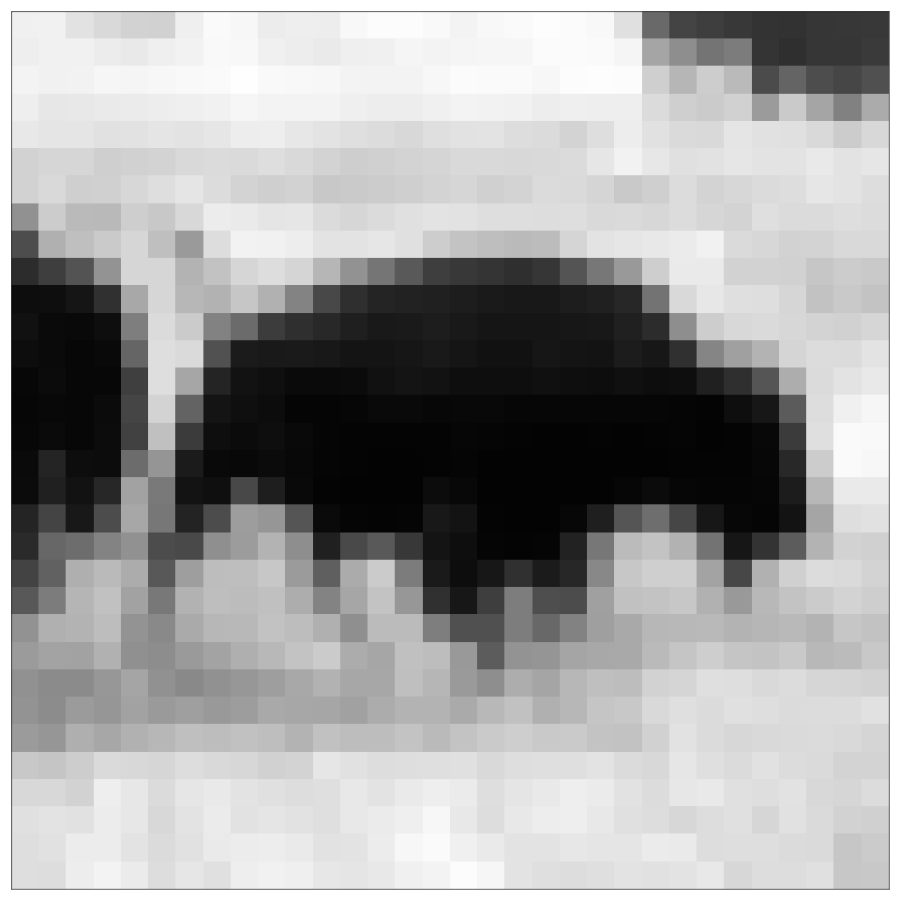
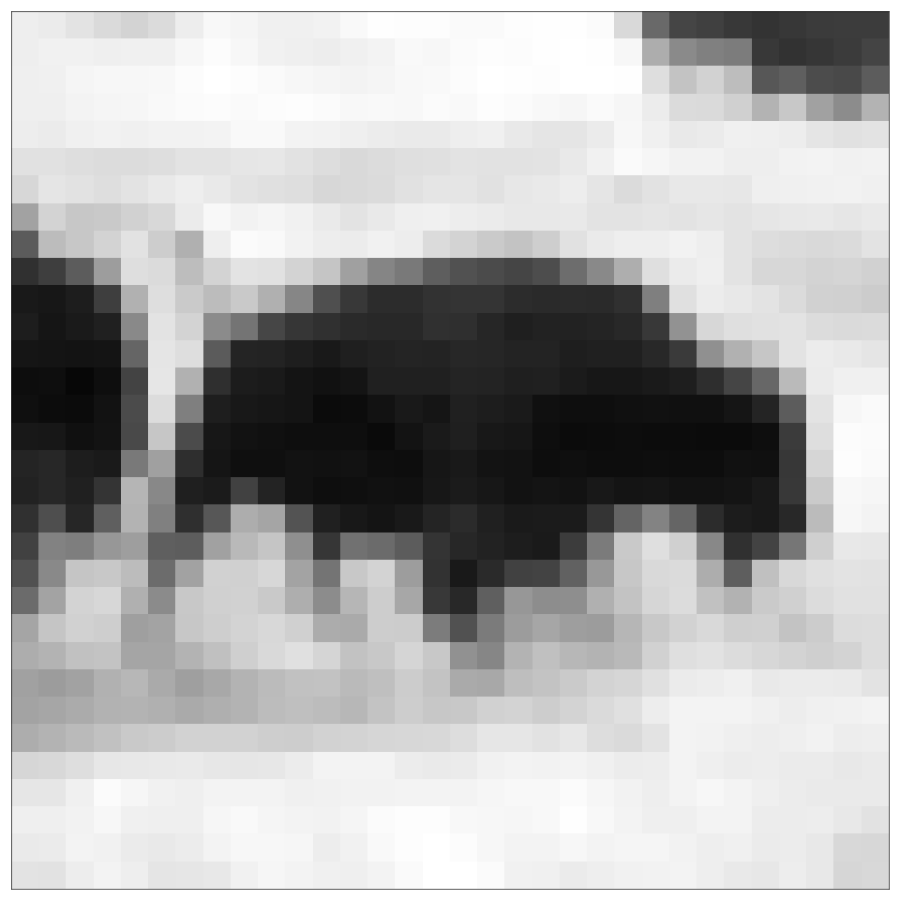
The external input \(\Omega_i(t)\) is scalar field that modulates the connectivity for the first 1024 neurons. The neuron index \(i\) corresponds to a known spatial coordinate \(x_i\). The remaining 1024 neurons have \(\Omega_i = 1\).
Fig 3a-b: (Top) External input field \(\Omega_i(t)\) shown on a 32×32 grid (left, first 1024 neurons) and sunflower arrangement (right, remaining 1024 neurons). (Bottom) Neural activity \(x_i\) at time \(t=0\).
Fig 3c: Sample activity time series for 100 neurons over 10,000 time steps. Y-axis shows neuron index.
Step 2: Train GNN
Train the GNN to learn connectivity \(W\), latent embeddings \(\mathbf{a}_i\), functions \(\phi^*/\psi^*\), and the external input field \(\Omega^*(x, y, t)\) using a coordinate-based MLP (SIREN).
Learning targets:
Connectivity matrix \(W\)
Latent vectors \(\mathbf{a}_i\)
Update function \(\phi^*(\mathbf{a}_i, x)\)
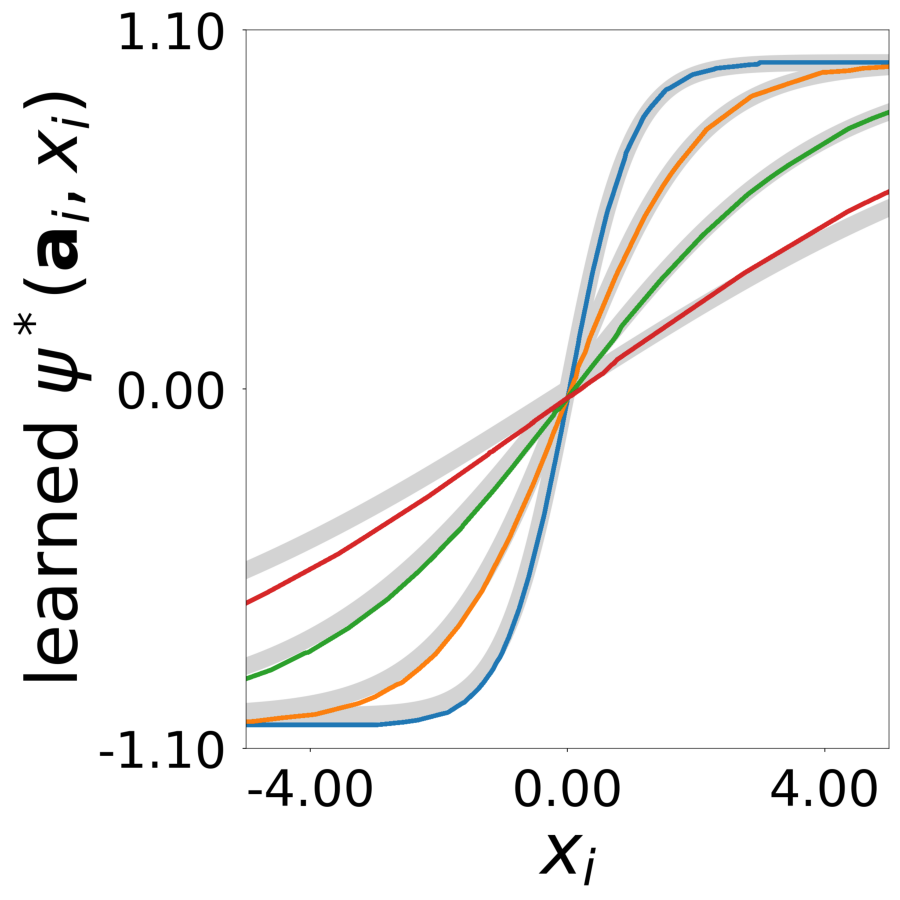
Transfer function \(\psi^*(x)\)
External input field \(\Omega^*(x, y, t)\) via SIREN network
Code
# STEP 2: TRAINprint()print("-"*80)print("STEP 2: TRAIN - Training GNN to learn W, embeddings, phi, psi, and Omega*")print("-"*80)# Check if trained model already exists (any .pt file in models folder)import globmodel_files = glob.glob(f'{log_dir}/models/*.pt')if model_files:print(f"trained model already exists at {log_dir}/models/")print("skipping training (delete models folder to retrain)")else:print(f"training for {config.training.n_epochs} epochs, {config.training.n_runs} run(s)")print(f"learning: connectivity W, latent vectors a_i, functions phi*, psi*")print(f"learning: external input field Omega*(x, y, t) via SIREN network")print(f"models: {log_dir}/models/")print(f"training plots: {log_dir}/tmp_training")print(f"tensorboard: tensorboard --logdir {log_dir}/")print() data_train( config=config, erase=False, best_model=best_model, style='color', device=device )
Step 3: Generate Publication Figures
Generate publication-quality figures matching Figure 3 from the paper.
Figure panels:
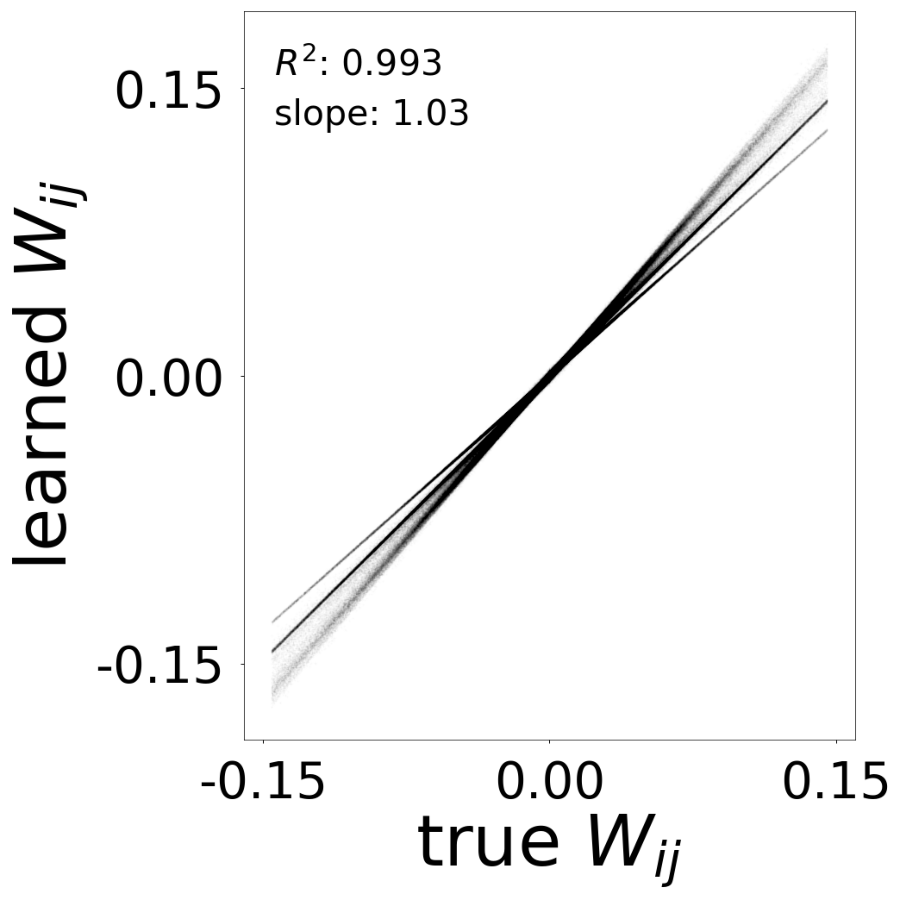
Fig 3d: Comparison of learned vs true connectivity W_ij
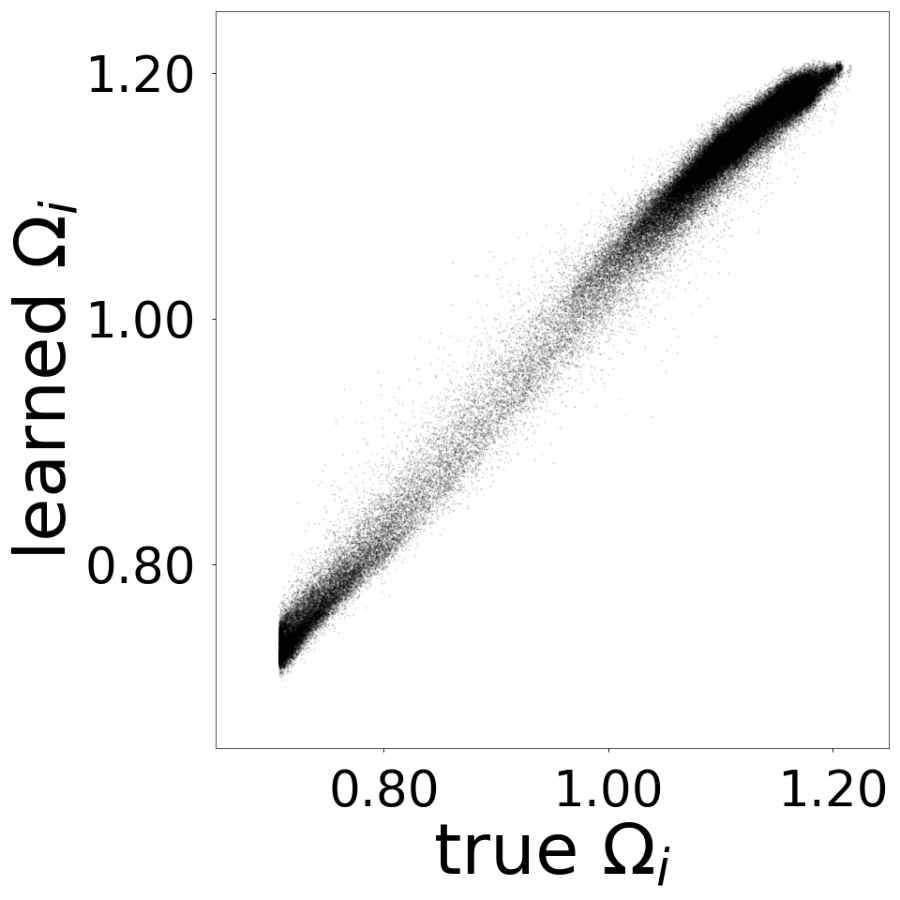
Fig 3e: Comparison of learned vs true Omega_i(t) values
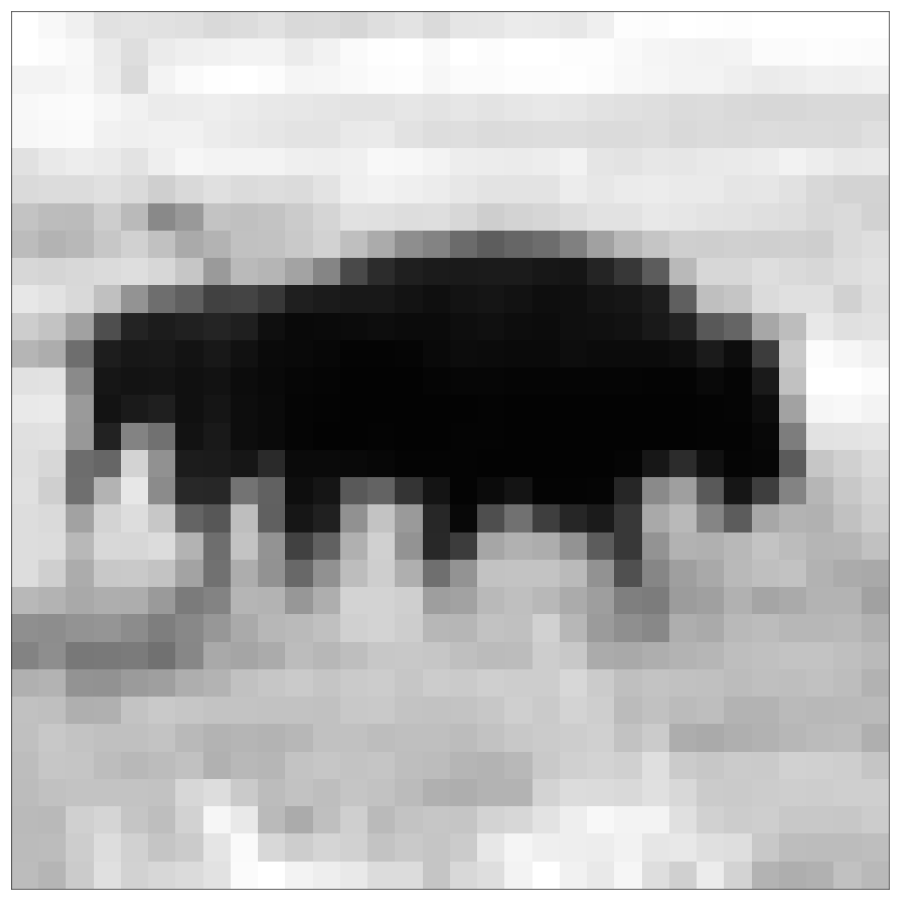
Fig 3f: True field Omega_i(t) at different time-points
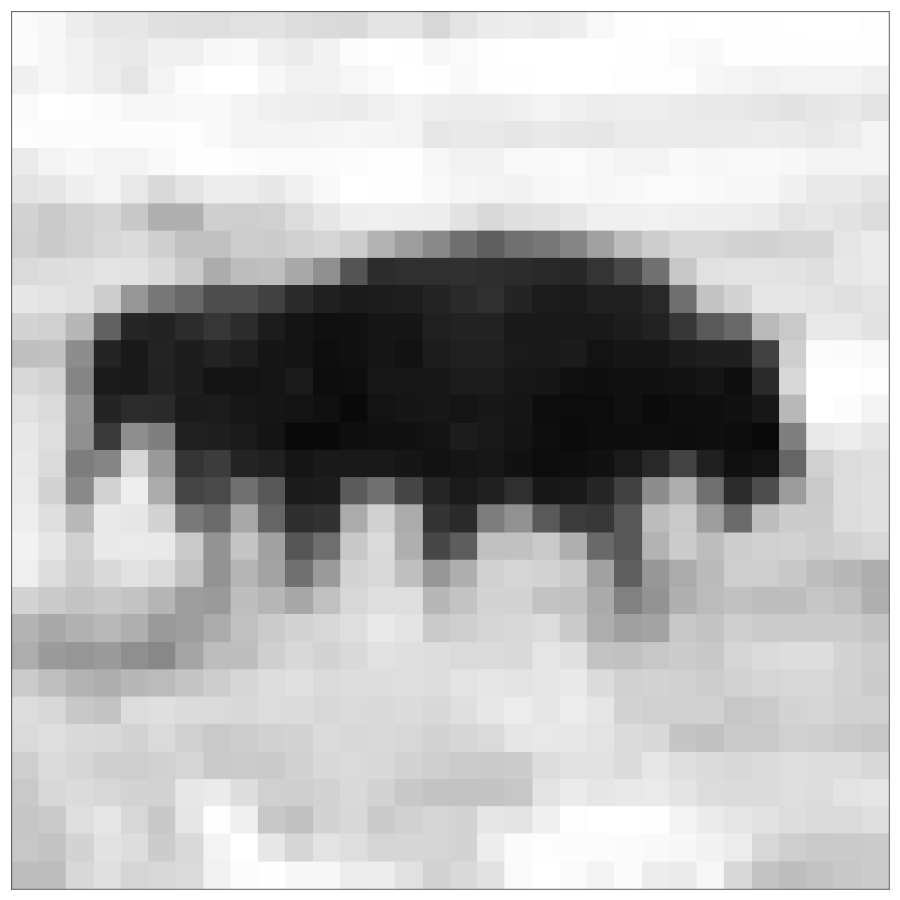
Fig 3g: Learned field Omega*(t) at different time-points
Code
# STEP 3: PLOTprint()print("-"*80)print("STEP 3: PLOT - Generating Figure 3 panels (d-g)")print("-"*80)print(f"Fig 3d: W learned vs true (R^2, slope)")print(f"Fig 3e: Omega learned vs true")print(f"Fig 3f: True field Omega_i(t) at different times")print(f"Fig 3g: Learned field Omega*(t) at different times")print(f"output: {log_dir}/results/")print()folder_name ='./log/'+ pre_folder +'/tmp_results/'os.makedirs(folder_name, exist_ok=True)data_plot(config=config, config_file=config_file, epoch_list=['best'], style='color', extended='plots', device=device, apply_weight_correction=True, plot_eigen_analysis=False)
Output Files
Rename output files to match Figure 3 panels.
Code
# Rename output files to match Figure 3 panelsprint()print("-"*80)print("renaming output files to Figure 3 panels")print("-"*80)results_dir =f'{log_dir}/results'os.makedirs(results_dir, exist_ok=True)# File mapping for simple copiesfile_mapping = {f'{graphs_dir}/activity_sample.png': f'{results_dir}/Fig3d_activity_sample.png',f'{results_dir}/weights_comparison_corrected.png': f'{results_dir}/Fig3e_weights_comparison.png',}for src, dst in file_mapping.items():if os.path.exists(src): shutil.copy2(src, dst)print(f"{os.path.basename(dst)}")import globimport numpy as npimport matplotlib.pyplot as pltimport matplotlib.image as mpimg# Copy Fig 3a-b from generated frame (plot_synaptic_frame_visual output)fig_file =f'{graphs_dir}/Fig/Fig_0_000000.png'if os.path.exists(fig_file): shutil.copy2(fig_file, f'{results_dir}/Fig3ab_external_input_activity.png')print(f"Fig3ab_external_input_activity.png")# Copy Fig 3c: Activity time seriesif os.path.exists(f'{graphs_dir}/activity.png'): shutil.copy2(f'{graphs_dir}/activity.png', f'{results_dir}/Fig3c_activity_time_series.png')print(f"Fig3c_activity_time_series.png")# Generate Fig 3f: True field Omega_i(t) montage from field imagesprint("generating Fig3f_omega_field_true.png (5-frame montage)...")field_dir =f'{results_dir}/field'frame_indices = [0, 10000, 20000, 30000, 40000]fig, axes = plt.subplots(1, 5, figsize=(20, 4))for idx, frame inenumerate(frame_indices): ax = axes[idx]# Find true field image for this frame true_field_files =sorted(glob.glob(f'{field_dir}/true_field*_{frame}.png'))if true_field_files: img = mpimg.imread(true_field_files[-1]) ax.imshow(img, cmap='gray') ax.set_xticks([]) ax.set_yticks([]) ax.set_title(f't={frame}', fontsize=12) ax.axis('off')plt.tight_layout()plt.savefig(f'{results_dir}/Fig3f_omega_field_true.png', dpi=150)plt.close()print(f"Fig3f_omega_field_true.png")# Generate Fig 3g: Learned field Omega*(t) montage from field imagesprint("generating Fig3g_omega_field_learned.png (5-frame montage)...")fig, axes = plt.subplots(1, 5, figsize=(20, 4))for idx, frame inenumerate(frame_indices): ax = axes[idx]# Find learned field image for this frame learned_field_files =sorted(glob.glob(f'{field_dir}/reconstructed_field_LR*_{frame}.png'))if learned_field_files: img = mpimg.imread(learned_field_files[-1]) ax.imshow(img, cmap='gray') ax.set_xticks([]) ax.set_yticks([]) ax.set_title(f't={frame}', fontsize=12) ax.axis('off')plt.tight_layout()plt.savefig(f'{results_dir}/Fig3g_omega_field_learned.png', dpi=150)plt.close()print(f"Fig3g_omega_field_learned.png")print()print("="*80)print("Figure 3 complete!")print(f"results saved to: {log_dir}/results/")print("="*80)
Figure 3 Panels
Fig 3d: Comparison of learned and true connectivity.
Fig 3e: Comparison of learned and true \(\Omega_i\) values.
Fig 3f-g: True and Learned External Input Fields
Showing \(\Omega_i(t)\) at frames 0, 10000, 20000, 30000, 40000.
True field \(\Omega_i\) at frame 0.
Learned field \(\Omega^*_i\) at frame 0.
True field \(\Omega_i\) at frame 10000.
Learned field \(\Omega^*_i\) at frame 10000.
True field \(\Omega_i\) at frame 20000.
Learned field \(\Omega^*_i\) at frame 20000.
True field \(\Omega_i\) at frame 30000.
Learned field \(\Omega^*_i\) at frame 30000.
True field \(\Omega_i\) at frame 40000.
Learned field \(\Omega^*_i\) at frame 40000.
Supplementary Figure 15: Learned Functions
Learned latent embeddings and functions from Figure 3 training.
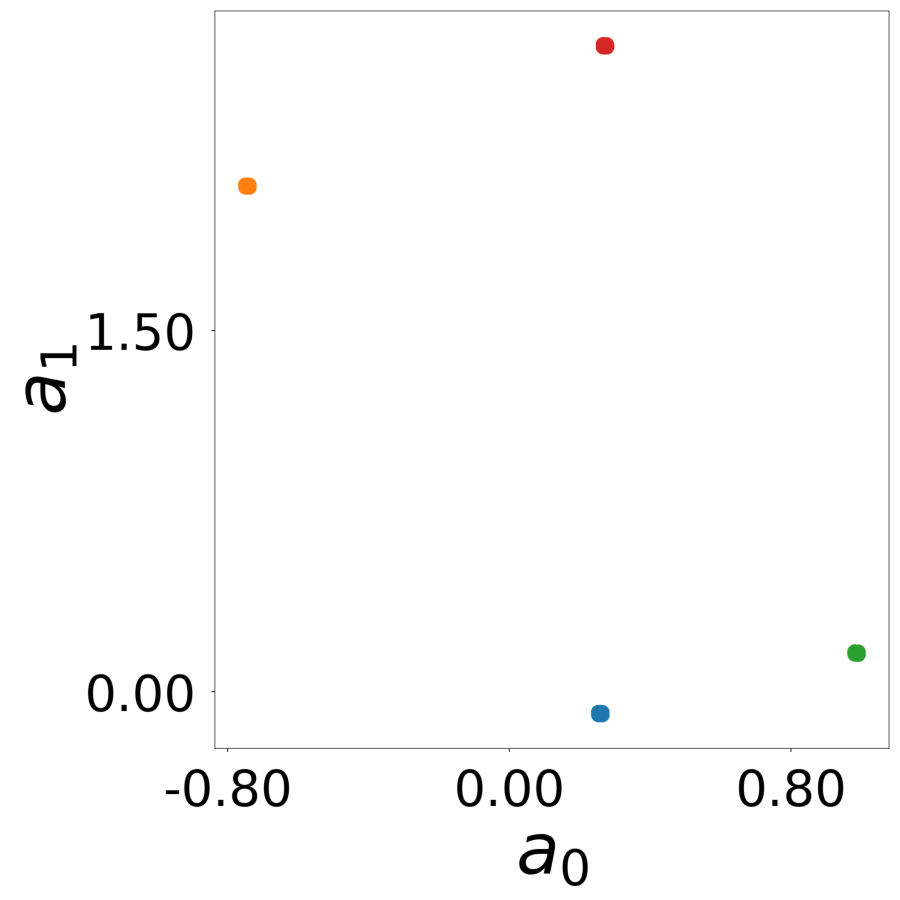
Supp. Fig 15f: Learned latent vectors \(a_i\).
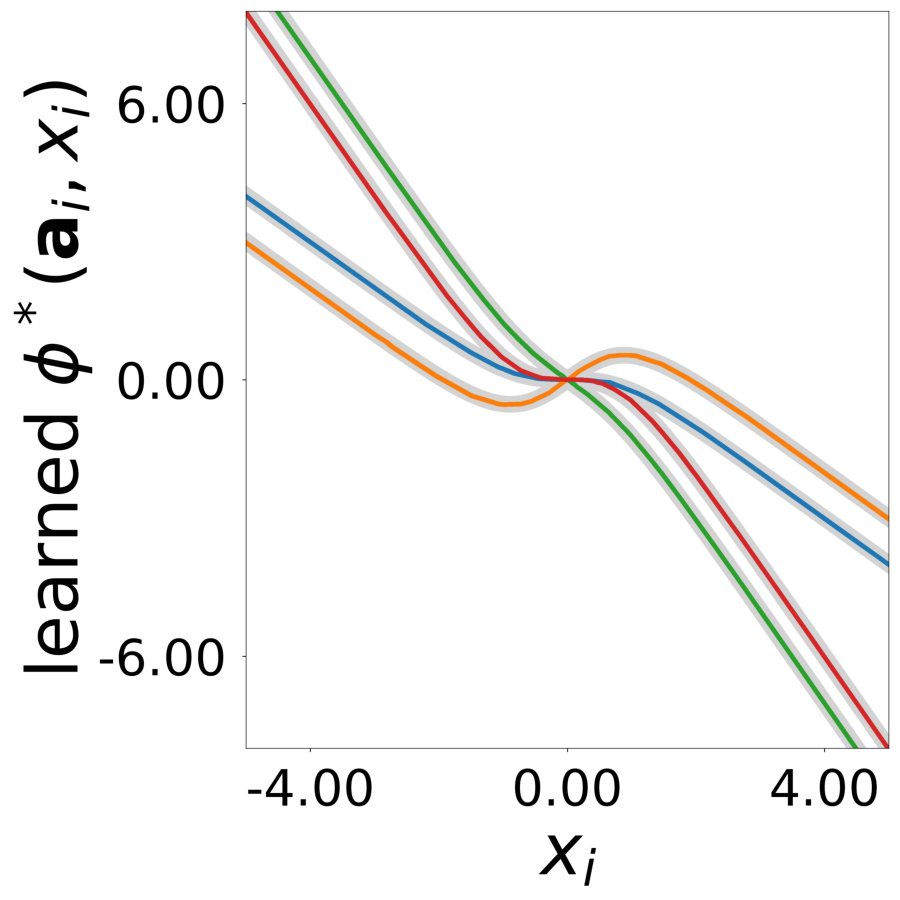
Supp. Fig 15g: Learned update functions \(\phi^*(a, x)\). Colors indicate true neuron types. True functions are overlaid in light gray.
Supp. Fig 15h: : Learned transfer function \(\psi^*(x)\), normalized to a maximum value of 1. True functions are overlaid in light gray.